
Wait four zero-return rounds at 10, then model one bet at 50: the scenario gives +363 only if selected payouts scale fivefold. That has not been verified at the higher stake. The 12 marked rounds actually made +175 at stake 10; paid waiting lost 512. Actual totals: 950 staked, 613 returned, net −337.
The wait-four rule in plain language
The candidate is easy to describe. Play at the base stake while counting consecutive rounds with a zero return. After four in a row, mark the next round for a one-round increase. Then return to the base stake and start counting again from zero. A nonzero return during the waiting phase resets the count. The result that completes the fourth empty round is not itself an increased-stake round: its outcome is already known.
For the measured replay, “mark” is the important word. All actual rounds were played at 10. We can identify which rounds would have met the rule without pretending that another stake was used. Across the two recordings, it marked 12 rounds. Those 12 cost 120 and returned 295, a net of +175. The other 83 cost 830 and returned 318, a net of −512. Together they are still the actual loss of −337.
Waiting is paid activity in this experiment. You cannot see the next personal slot outcome without generating a round. Four empty rounds at 10 cost 40. If a proposed next stake is 50, the five-round cycle has exposed 90 before its final return is known. Sitting for four animation lengths without spinning is a different action and does not reveal four results. Our data do not test clock time, tapping rhythm or a favourable time of day.
The counter resets between the actual recordings: one session has 20 rounds and the continuation has 75. There was a separate control inspection between them, excluded from this fixed-stake dataset. We do not carry a partly completed losing streak through that gap. This is a reproducible rule with a specific reset, not an invitation to choose whichever starting point makes the later win look predictable.
All 95 paid rounds, including the waiting
What +363 in the model actually means
To explore a stake increase, we calculated a deliberately limited scenario. Suppose each selected round costs 50 instead of 10 and returns exactly five times its recorded payout. The other rounds remain at 10. The total modelled stake becomes 1,430, modelled returns become 1,793 and modelled net becomes +363. This is arithmetic under an assumption. None of the selected rounds was actually replayed at 50, and the 1,793 was not a recorded payment.
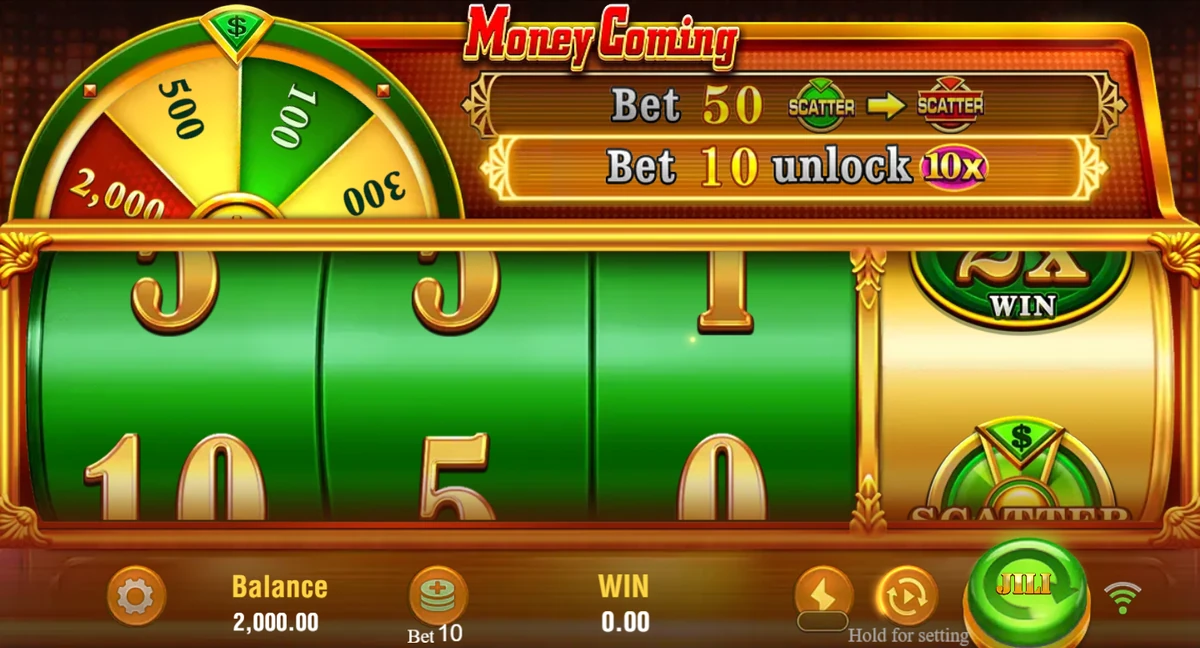
That assumption matters especially in Money Coming. Raising the stake changes visible feature eligibility; at 50, the original client describes the red Scatter change. We do not know what the selected higher-stake rounds would have returned. A scaled version of the old result may not describe the actual distribution or feature path. For that reason, the model graph has its own label and must not be read as an additional winning live session.
The measured facts still give a useful break-even question. Keeping the other 83 observed rounds unchanged leaves 318 in returns. A strategy spending 1,430 in total would need at least 1,112 from its 12 increased-stake rounds to break even. Their real returns at 50 are unknown. The proportional model assumes 1,475, which exceeds that requirement by 363. This calculation shows exactly where the apparent gain comes from instead of hiding it in a performance percentage.
At an assumed increased stake of 100, the same selected marks produce +1,238 in the proportional scenario. That is the largest result in our bounded model grid, not evidence that 100 is the best real stake. More money is exposed, and the entire improvement still relies on the unverified scaling rule. Increasing a model parameter is easy; validating the changed game requires a new, separately recorded session under predefined settings.
We tested 675 parameter combinations. The three trigger types were zero returns, returns no higher than the stake, or a fixed round count. Other parameters were waits from 1 to 15, raised blocks from 1 to 5 rounds, and factors of 2, 5 or 10. The factor of 2 represents a purely hypothetical stake of 20, which is absent from the original menu we inspected. It is an arithmetic sensitivity case, not an available setting in that client. Only 21 had a positive combined model result. These choices were examined after the data were available. A profitable setting selected from that search is a historical fit, not an untouched prediction. The full private search is retained so an unattractive result cannot disappear from the selection process.
A positive endpoint can hide the amount needed to reach it. In the fivefold wait-four scenario, the first session falls as far as 195 credits below its starting point and finishes 160 down. Its largest fall from a previous peak is 215. The continuation falls 265 below its own start before the later features lift the model. These are model losses, not extra observed bets. A small budget could prevent a player from reaching the attractive part of such a curve.
The scenario assumes every scheduled stake can be accepted. It does not add a bankroll stop, a deposit, cashback or an operator bonus. The total amount wagered is not the same as the largest temporary loss. Returns can fund later stakes, while a losing streak can exhaust a small balance before the total planned exposure is reached. Change a budget rule and the sequence of accepted bets may change too. That requires another explicitly defined calculation, not a smaller budget label pasted onto the same profitable endpoint.
Wait 4 zero-return rounds at 10, mark the next 1 for 50, then reset. Waiting is paid. The model assumes 5× returns, although a new stake changes game features.
Actual −337 versus conditional +363
Explore the same history
This tool assumes proportional payouts. It cannot predict the next spin. All waiting costs are included.
Press Calculate to load the 95 recorded rows.
| Wait | Raised rounds | First 20 net | Next 75 net | Model net |
|---|---|---|---|---|
| 3 | 1 | +40 | −653 | −613 |
| 3 | 2 | −260 | +243 | −17 |
| 4 | 1 | −160 | +523 | +363 |
| 4 | 2 | −20 | +187 | +167 |
| 5 | 1 | +60 | −453 | −393 |
| 5 | 2 | −160 | −693 | −853 |
Two respins explain most of the attractive pattern
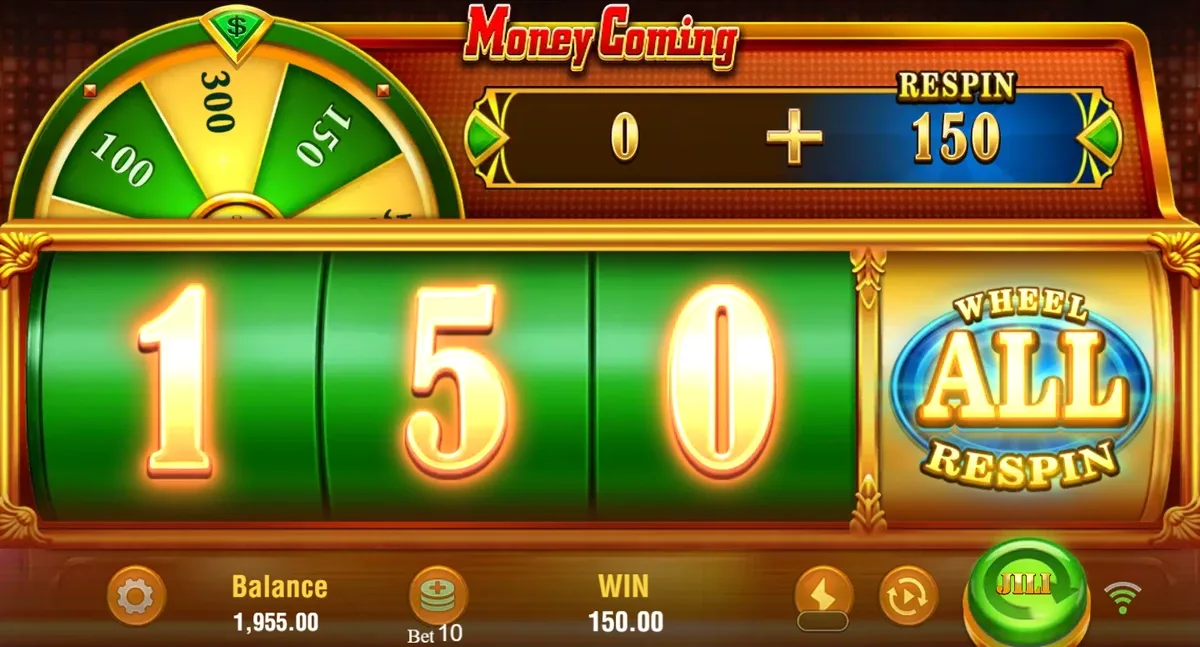
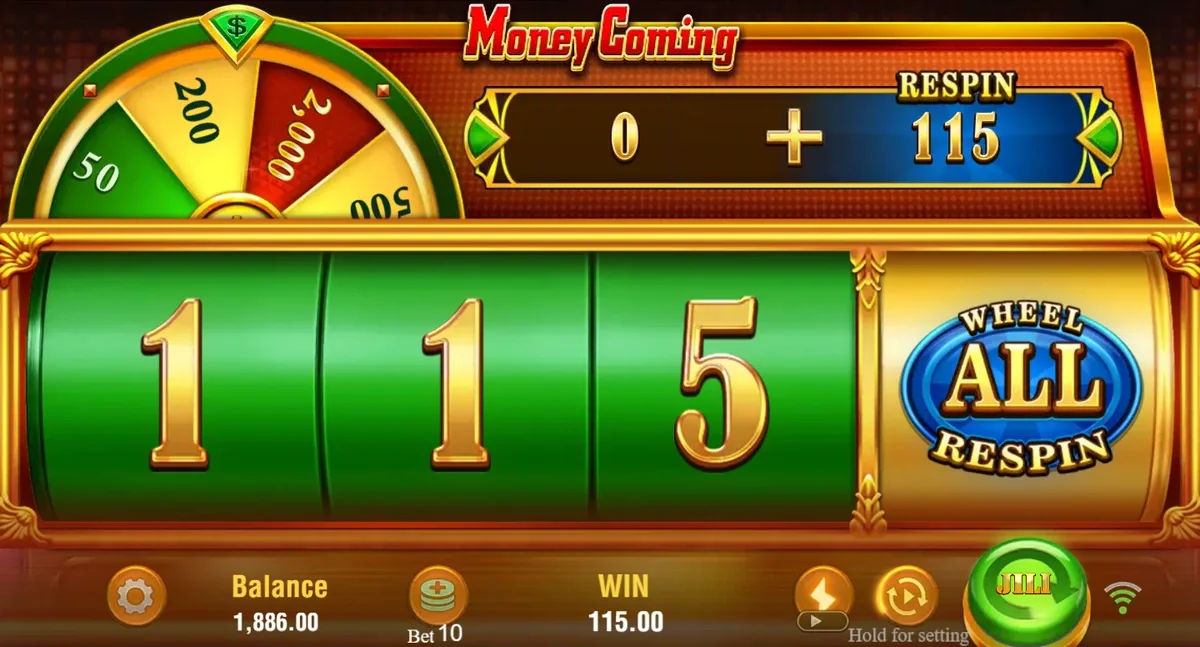
The marked rounds returned 295 in total. Two of them returned 150 and 115, or 265 combined. Those two awards account for about 89.8% of the marked returns. They occurred at combined recorded rounds 49 and 70. The remaining marked rounds returned only 30 between them. A pattern that happens to include those two features can look much stronger than a nearby pattern that misses either one.
Changing the zero-return wait from four to three, while keeping one raised round and a fivefold proportional assumption, changes the modelled net from +363 to −613. Waiting five instead produces −393. Keeping a wait of four but increasing two rounds gives +167 in the model. These are not small measurement differences. They show that the fitted result is sensitive to exactly which rounds receive the assumed extra stake.
The two actual sessions also disagree. The wait-four, raise-one model at 50 gives −160 on the initial 20 and +523 on the 75-round continuation. Combining them produces +363, but does not mean both sessions were profitable. The marked outcomes at the real stake of 10 were −20 and +195 respectively. Showing the split prevents a positive combined total from hiding where the pattern failed.
An independent sensitivity check selected a waiting rule from the first 20 rounds alone. In that check, waits from 1 to 20 and raised blocks from 1 to 10 were ranked by the marked net, with declared tie-breaks. It picked a wait of 11 losses followed by one marked round. That marked round made +45 in the first session; the selected continuation round lost 10. The later data did not reproduce the early success. Because all data were already known during this project, this is still retrospective rather than a prospectively sealed holdout.
A useful next experiment would write down the exact wait, trigger definition, raised stake, block length, starting budget and stop condition before accepting a new round. It would keep every base and elevated stake and stop on the provider’s request. No such higher-stake trial has been completed here. The current study identifies a testable candidate and its weakness, not a validated way to recover a loss.
Ten stopping rules at the real recorded stake
Stopping rules can be replayed without inventing a new stake. Each rule below consumes consecutive recorded rounds at 10 and stops after its condition is crossed. It does not discard losing rounds inside the played prefix. The same settings restart at the beginning of each actual session. The two resulting nets are then added. A row that says six bets means six paid bets were included, not that the rule survived all 95.
The most attractive early result is simple: stop when session net reaches at least +20. The first recording reaches +20 at its third round, after two losses and a return of 50. The second recording never reaches a positive net from its own start. Without another limit, it finishes −257, giving −237 across the two applications of the rule. Describing only the first three bets would conceal the failed repetition.
Adding a 50-credit loss limit to the +20 profit target changes the two results to +20 and −50, or −30 combined. A three-round cap gives +20 and −20, exactly zero, using only six bets. This was the best combined result in the 968 tested threshold-and-length combinations. No tested combination in that grid produced a positive total across the two actual session starts. That does not prove every imaginable strategy loses; it answers this defined search.
A loss threshold can be overshot by a completed round. In the loss-50 rule, the initial session ends at −55, not exactly −50. The rule is checked after settlement, and the next accepted stake can move the balance across the threshold. Treat the threshold as a stop trigger, not a promise that the final loss will equal the entered number exactly. This is also why a current game’s stop-control wording deserves careful reading.
Restarting after a stop does not itself change the recorded arithmetic. If a fixed-stake rule eventually consumes all 95 outcomes without omitting any, the total remains −337. A pause may control time or session length, but it cannot erase earlier paid losses. A rule that skips future outcomes would require a defensible way to observe or generate them. Simply crossing out losing rows in a personal-slot ledger is not a playable strategy.
| Rule | First 20 | Next 75 | Combined net | Bets |
|---|---|---|---|---|
| All recorded rounds | −80 | −257 | −337 | 95 |
| Take profit 20 | +20 | −257 | −237 | 78 |
| Loss limit 50 | −55 | −50 | −105 | 18 |
| Profit 20 / loss 50 | +20 | −50 | −30 | 9 |
| Three-round cap | +20 | −20 | 0 | 6 |
| Five-round cap | 0 | −40 | −40 | 10 |
| Ten-round cap | −35 | −75 | −110 | 20 |
| Twenty-round cap | −80 | −175 | −255 | 40 |
| Profit 10 / loss 20 | −20 | −20 | −40 | 4 |
| Profit 50 / loss 100 /20 rounds | −105 | −105 | −210 | 30 |
1. All recorded rounds −337
Keep the stake at 10 and check after each settled round. Stop at the first condition reached. A dash means that limit is off. No limits means all available rounds.
Profit target: — · Loss trigger: — · Round cap: —.
All recorded rounds
2. Take profit 20 −237
Keep the stake at 10 and check after each settled round. Stop at the first condition reached. A dash means that limit is off. No limits means all available rounds.
Profit target: 20 · Loss trigger: — · Round cap: —.
Take profit 20
3. Loss limit 50 −105
Keep the stake at 10 and check after each settled round. Stop at the first condition reached. A dash means that limit is off. No limits means all available rounds.
Profit target: — · Loss trigger: 50 · Round cap: —.
Loss limit 50
4. Profit 20 / loss 50 −30
Keep the stake at 10 and check after each settled round. Stop at the first condition reached. A dash means that limit is off. No limits means all available rounds.
Profit target: 20 · Loss trigger: 50 · Round cap: —.
Profit 20 / loss 50
5. Three-round cap 0
Keep the stake at 10 and check after each settled round. Stop at the first condition reached. A dash means that limit is off. No limits means all available rounds.
Profit target: — · Loss trigger: — · Round cap: 3.
Three-round cap
6. Five-round cap −40
Keep the stake at 10 and check after each settled round. Stop at the first condition reached. A dash means that limit is off. No limits means all available rounds.
Profit target: — · Loss trigger: — · Round cap: 5.
Five-round cap
7. Ten-round cap −110
Keep the stake at 10 and check after each settled round. Stop at the first condition reached. A dash means that limit is off. No limits means all available rounds.
Profit target: — · Loss trigger: — · Round cap: 10.
Ten-round cap
8. Twenty-round cap −255
Keep the stake at 10 and check after each settled round. Stop at the first condition reached. A dash means that limit is off. No limits means all available rounds.
Profit target: — · Loss trigger: — · Round cap: 20.
Twenty-round cap
9. Profit 10 / loss 20 −40
Keep the stake at 10 and check after each settled round. Stop at the first condition reached. A dash means that limit is off. No limits means all available rounds.
Profit target: 10 · Loss trigger: 20 · Round cap: —.
Profit 10 / loss 20
10. Profit 50 / loss 100 /20 rounds −210
Keep the stake at 10 and check after each settled round. Stop at the first condition reached. A dash means that limit is off. No limits means all available rounds.
Profit target: 50 · Loss trigger: 100 · Round cap: 20.
Profit 50 / loss 100 /20 rounds
What was recorded, and what was not
The actual corpus contains 20 initial rounds and 75 continuation rounds, all in original JILI Money Coming at 10 virtual credits. Each included row has a settled result and a checked balance change. Total stakes are 950 and returns are 613. Dividing returns by stakes gives about 64.5% observed return for this particular sample. That percentage is not the official RTP and should not be presented as a long-run estimate from such a small selected recording.
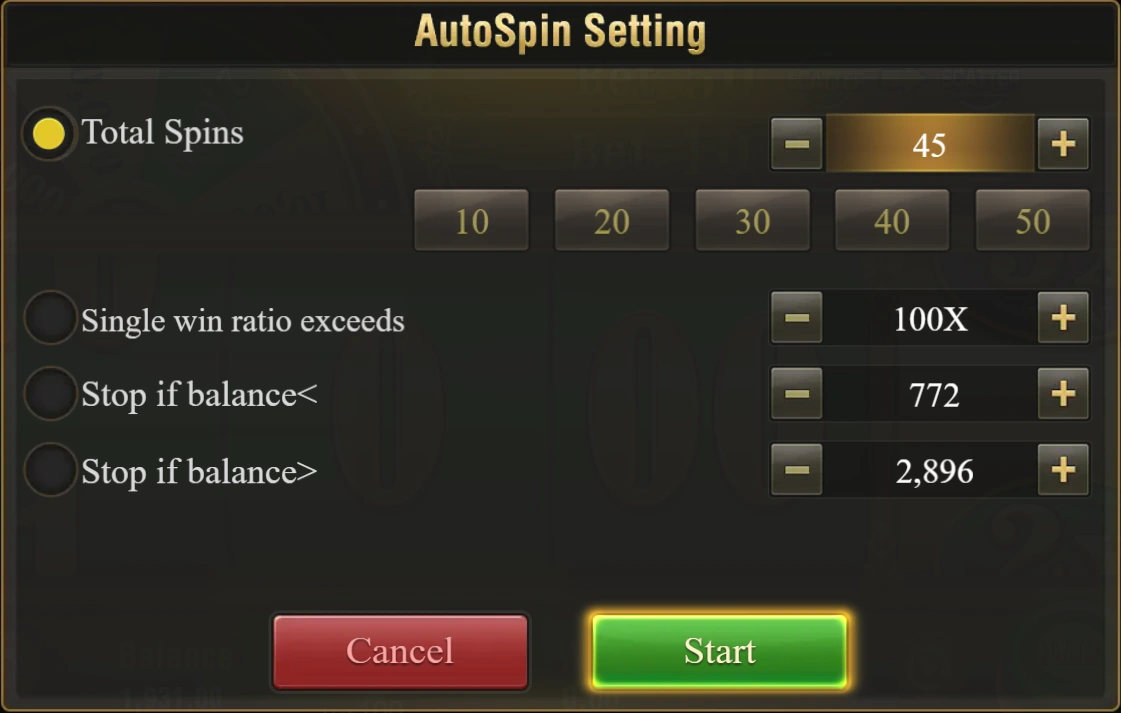
The later attempt after continuation round 75 displayed the provider’s “Take a short break” message, MSG -91. It did not become another verified completed round and is excluded from the 95. The recorded balance remained unchanged. The collection stopped there. We did not repeatedly open new sessions to bypass the break or extend the record until a positive ending appeared.
Two silent live recordings cover part of the continuation. The short clip on this page shows a completed 115-credit respin, while earlier outcomes are documented with still captures and ledger entries. There is no continuous video of all 95 rounds. The diagram is generated from the full allowlisted ledger, not inferred from highlights. The CSV download includes every counted stake, return and session label without private session URLs or player identifiers.
The practical use is to distinguish three claims. An actual recorded result is something that happened at stake 10. A stopping-rule replay asks when that recorded sequence would have ended. A proportional stake model assumes payments at a different stake that were never observed. You can compare the charts, but you cannot combine those categories into one claimed live profit. The illustrated rules explain the game fields; the original demo lets you inspect them yourself.

Full round ledger
| Round | Stake | Return | Net | Cumulative net |
|---|---|---|---|---|
| 1 | 10 | 0 | −10 | −10 |
| 2 | 10 | 0 | −10 | −20 |
| 3 | 10 | 50 | +40 | +20 |
| 4 | 10 | 0 | −10 | +10 |
| 5 | 10 | 0 | −10 | 0 |
| 6 | 10 | 0 | −10 | −10 |
| 7 | 10 | 15 | +5 | −5 |
| 8 | 10 | 0 | −10 | −15 |
| 9 | 10 | 0 | −10 | −25 |
| 10 | 10 | 0 | −10 | −35 |
| 11 | 10 | 0 | −10 | −45 |
| 12 | 10 | 0 | −10 | −55 |
| 13 | 10 | 0 | −10 | −65 |
| 14 | 10 | 0 | −10 | −75 |
| 15 | 10 | 0 | −10 | −85 |
| 16 | 10 | 0 | −10 | −95 |
| 17 | 10 | 0 | −10 | −105 |
| 18 | 10 | 0 | −10 | −115 |
| 19 | 10 | 55 | +45 | −70 |
| 20 | 10 | 0 | −10 | −80 |
| 21 | 10 | 0 | −10 | −90 |
| 22 | 10 | 0 | −10 | −100 |
| 23 | 10 | 10 | 0 | −100 |
| 24 | 10 | 0 | −10 | −110 |
| 25 | 10 | 0 | −10 | −120 |
| 26 | 10 | 0 | −10 | −130 |
| 27 | 10 | 15 | +5 | −125 |
| 28 | 10 | 0 | −10 | −135 |
| 29 | 10 | 0 | −10 | −145 |
| 30 | 10 | 0 | −10 | −155 |
| 31 | 10 | 0 | −10 | −165 |
| 32 | 10 | 0 | −10 | −175 |
| 33 | 10 | 0 | −10 | −185 |
| 34 | 10 | 0 | −10 | −195 |
| 35 | 10 | 0 | −10 | −205 |
| 36 | 10 | 0 | −10 | −215 |
| 37 | 10 | 0 | −10 | −225 |
| 38 | 10 | 0 | −10 | −235 |
| 39 | 10 | 0 | −10 | −245 |
| 40 | 10 | 0 | −10 | −255 |
| 41 | 10 | 0 | −10 | −265 |
| 42 | 10 | 15 | +5 | −260 |
| 43 | 10 | 0 | −10 | −270 |
| 44 | 10 | 55 | +45 | −225 |
| 45 | 10 | 0 | −10 | −235 |
| 46 | 10 | 0 | −10 | −245 |
| 47 | 10 | 0 | −10 | −255 |
| 48 | 10 | 0 | −10 | −265 |
| 49 | 10 | 150 | +140 | −125 |
| 50 | 10 | 0 | −10 | −135 |
| 51 | 10 | 0 | −10 | −145 |
| 52 | 10 | 0 | −10 | −155 |
| 53 | 10 | 0 | −10 | −165 |
| 54 | 10 | 0 | −10 | −175 |
| 55 | 10 | 0 | −10 | −185 |
| 56 | 10 | 0 | −10 | −195 |
| 57 | 10 | 15 | +5 | −190 |
| 58 | 10 | 0 | −10 | −200 |
| 59 | 10 | 0 | −10 | −210 |
| 60 | 10 | 0 | −10 | −220 |
| 61 | 10 | 0 | −10 | −230 |
| 62 | 10 | 0 | −10 | −240 |
| 63 | 10 | 0 | −10 | −250 |
| 64 | 10 | 0 | −10 | −260 |
| 65 | 10 | 11 | +1 | −259 |
| 66 | 10 | 0 | −10 | −269 |
| 67 | 10 | 0 | −10 | −279 |
| 68 | 10 | 0 | −10 | −289 |
| 69 | 10 | 0 | −10 | −299 |
| 70 | 10 | 115 | +105 | −194 |
| 71 | 10 | 0 | −10 | −204 |
| 72 | 10 | 0 | −10 | −214 |
| 73 | 10 | 0 | −10 | −224 |
| 74 | 10 | 0 | −10 | −234 |
| 75 | 10 | 0 | −10 | −244 |
| 76 | 10 | 11 | +1 | −243 |
| 77 | 10 | 0 | −10 | −253 |
| 78 | 10 | 0 | −10 | −263 |
| 79 | 10 | 0 | −10 | −273 |
| 80 | 10 | 0 | −10 | −283 |
| 81 | 10 | 0 | −10 | −293 |
| 82 | 10 | 0 | −10 | −303 |
| 83 | 10 | 0 | −10 | −313 |
| 84 | 10 | 0 | −10 | −323 |
| 85 | 10 | 55 | +45 | −278 |
| 86 | 10 | 0 | −10 | −288 |
| 87 | 10 | 11 | +1 | −287 |
| 88 | 10 | 15 | +5 | −282 |
| 89 | 10 | 0 | −10 | −292 |
| 90 | 10 | 0 | −10 | −302 |
| 91 | 10 | 0 | −10 | −312 |
| 92 | 10 | 0 | −10 | −322 |
| 93 | 10 | 15 | +5 | −317 |
| 94 | 10 | 0 | −10 | −327 |
| 95 | 10 | 0 | −10 | −337 |
Round21 starts the separate 75-round session.